Kim Stenbak’s 4th-graders had a burning question, one they brought up at regular intervals during class at Union Ridge Elementary School.
“Has the principal said yes yet?”
The class had collected data from both teachers and students about the impacts of outdoor learning, in an attempt to convince the administration that getting outside was beneficial. “They had such buy-in that they knew they wanted to make a change,” says Stenbak. “They had experienced the outdoor activities and they knew that other kids should have that experience too.”
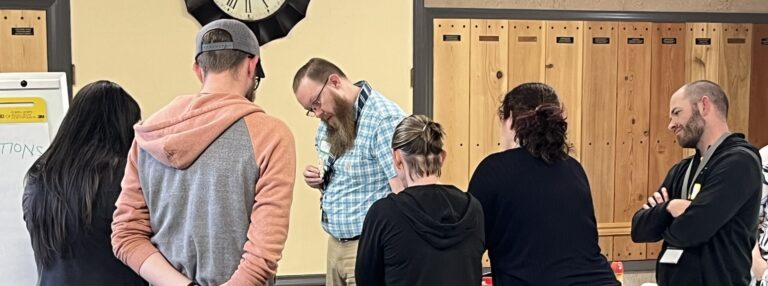
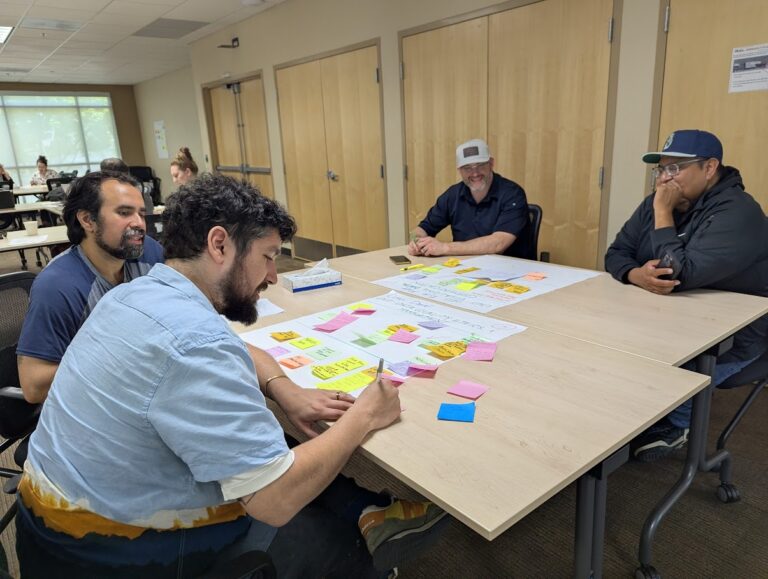
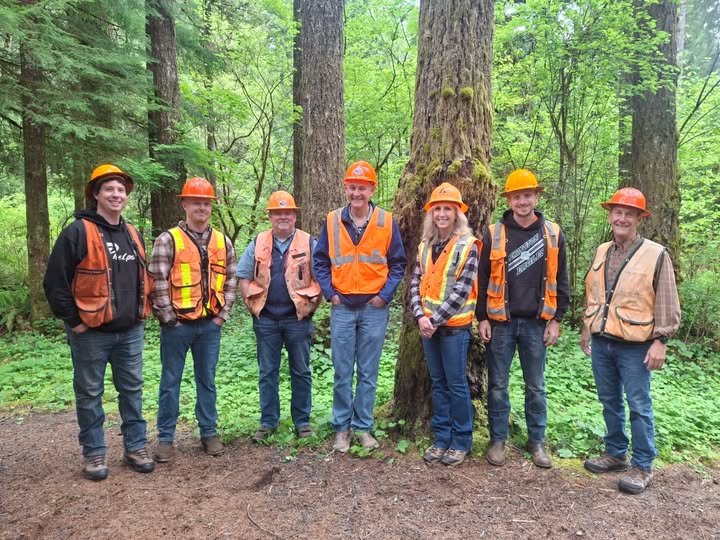
Such systemic integration of outdoor, place-based learning is exactly what Stacy Meyer hoped would result from the workshop series Taking Learning Outside. Meyer is the Regional Science Coordinator for ESD 112. Over seven months, regional educators were invited to attend workshops on elementary school gardens, High Impact Field Experiences (HIFEs), authentic engagement in outdoor learning, and outdoor learning for middle and high school students. PEI’s Lower Columbia FieldSTEM Coordinator Emily Newman facilitated several workshops and joined partners Lower Columbia School Gardens and Lower Columbia Nature Network and others. Educators could choose which workshops best suited their interests and schedules.
The series was the natural result of teacher demand, according to Meyer. “This was developed in response to teachers and their needs,” she explains. “A couple of years ago, we did a fully virtual Taking Learning Outside series. There were just three online courses, and the response from teachers in Southwest Washington was strong. We would have 70 to 80 teachers showing up for an evening Zoom. Teachers recognize how special it is to live in Southwest Washington and they want to build those authentic connections to the natural world and the natural resources that surround us with classroom learning experiences.”
Stenbak says the series helped her gain confidence to take students outdoors. “It can be a little daunting and scary. The people who were at the workshops or running the different professional development sessions were really supportive and had practical tips so that I felt more comfortable going outside. They told me, ‘It’s okay to start small. It doesn’t have to be grand.’”
“We had a principal who got excited thinking about a schoolwide model of what it would look like for every grade at the school to have authentic outdoor connections and learning opportunities. They were thinking about what could be done on their school campus to build coherence. It’s been great having some administrators come and think about how this kind of learning can infuse student experiences at their school. This is a model of what’s possible.”
– Stacy Meyer, Regional Science Coordinator, ESD 112
Meyer observed the power of connecting like-minded educators. “We’ve seen that teachers find this really valuable but often feel isolated and like they might be the only person in their building who was driving this work,” she explains. “This workshop series brought teachers together to hear from other educators at other buildings or in other districts who had the same kind of passion, so they know they’re not the only ones.”
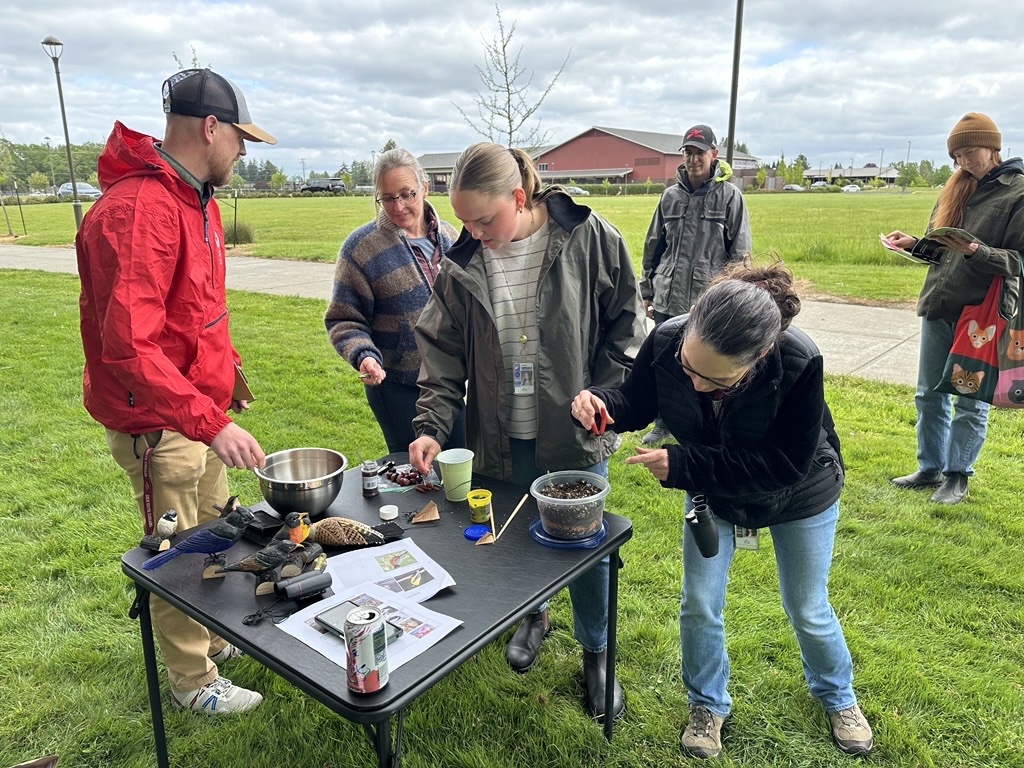
Community partners were an important asset as well, Meyer notes. “That’s the real strength of this model. Pacific Education Institute has all of this great experience, strength and knowledge around FieldSTEM approaches, with resources and storylines. Lower Columbia School Gardens is an organization with deep expertise in supporting garden-based learning, and Lower Columbia Nature Network is a great hub in our region for building out some of the greening school yards work and connecting partners.”
Middle School teacher Rachel Prince was ready to take full advantage of those partnerships, convening the superintendent of her district, the elementary school principal, WSU Extension, the U.S. Forest Service and Friends of Columbia Gorge. “Emily worked with us and we had started a plan to create an outdoor space for learning and potentially create a garden space in conjunction with the elementary school to provide cooperative learning opportunities,” Prince explains. Unfortunately, due to budget cuts, Prince’s school closed down and now she is in a new role at a different school.
All is not lost, however. Once it became clear the building would close, Prince met with Newman to regroup. “I’m going to be teaching eighth-grade curriculum this year, and she helped work through a plan to be able to combine them with seventh-grade classes and still make science connections with some of those partners,” she says. “Emily was awesome.”
Stenbak, meanwhile, was able to implement ideas from the workshops with her students, including nature journaling, sound mapping and a math activity. The students kept reflection journals and reported feeling calmer outdoors. “They love being outside, and they started to make connections and notice things that they hadn’t before,” Stenbak says. “They were so engaged.”
While Stenbak’s principal needed some convincing about this approach, other administrators were all in, according to Meyer. “We had a principal who got excited thinking about a schoolwide model of what it would look like for every grade at the school to have authentic outdoor connections and learning opportunities,” she says. “They were thinking about what could be done on their school campus to build coherence. It’s been great having some administrators come and think about how this kind of learning can infuse student experiences at their school. This is a model of what’s possible.”
Meyer, Newman and representatives from all community partner organizations will be sharing their experience with Taking Learning Outside at the annual E3 Washington conference this fall. Ideally, ESD 112 will continue to offer the workshop series, pending one challenge. “If we want to continue, we do need funding,” says Newman.