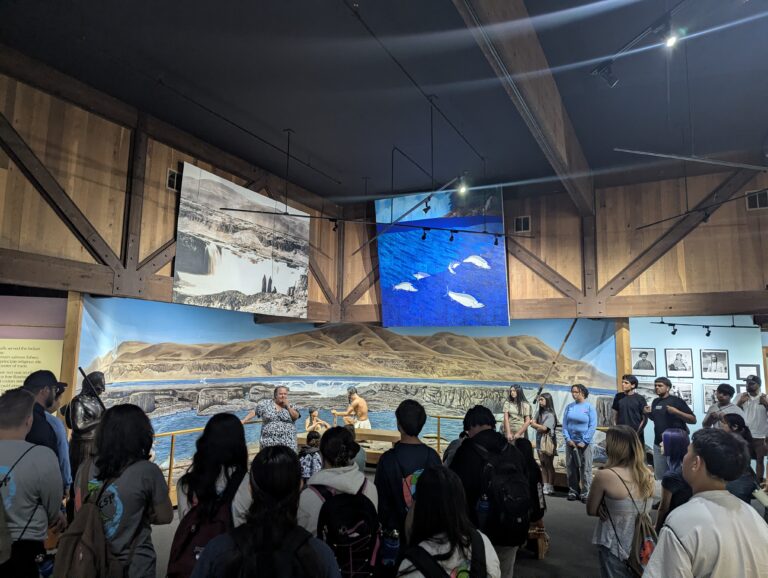
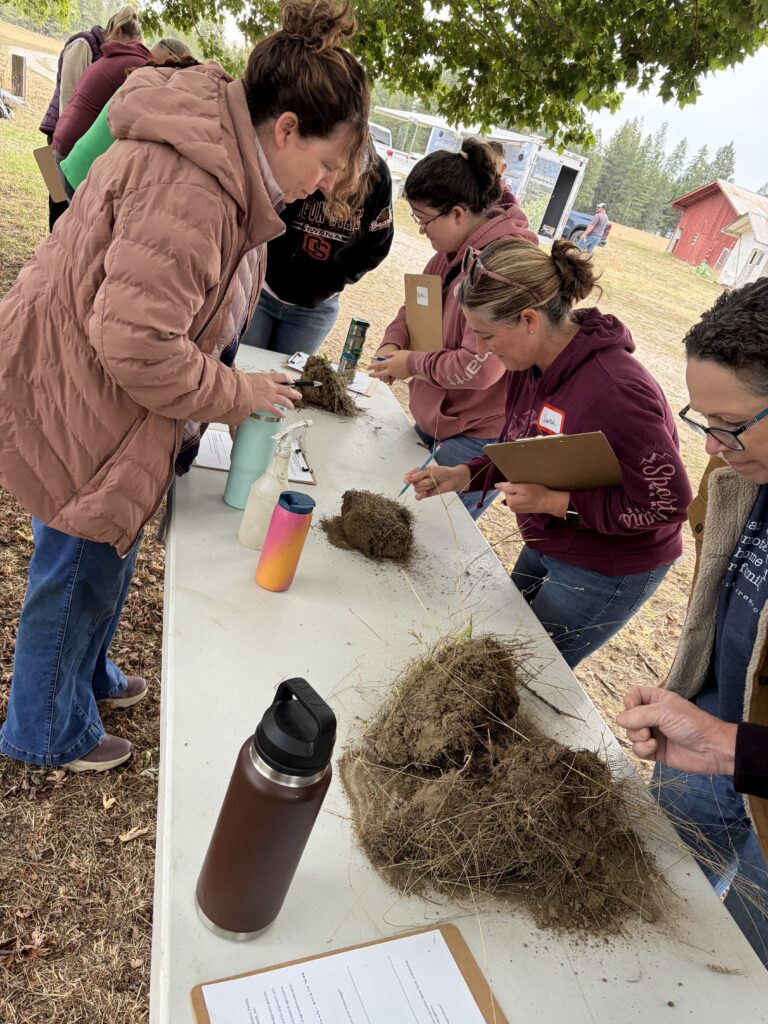
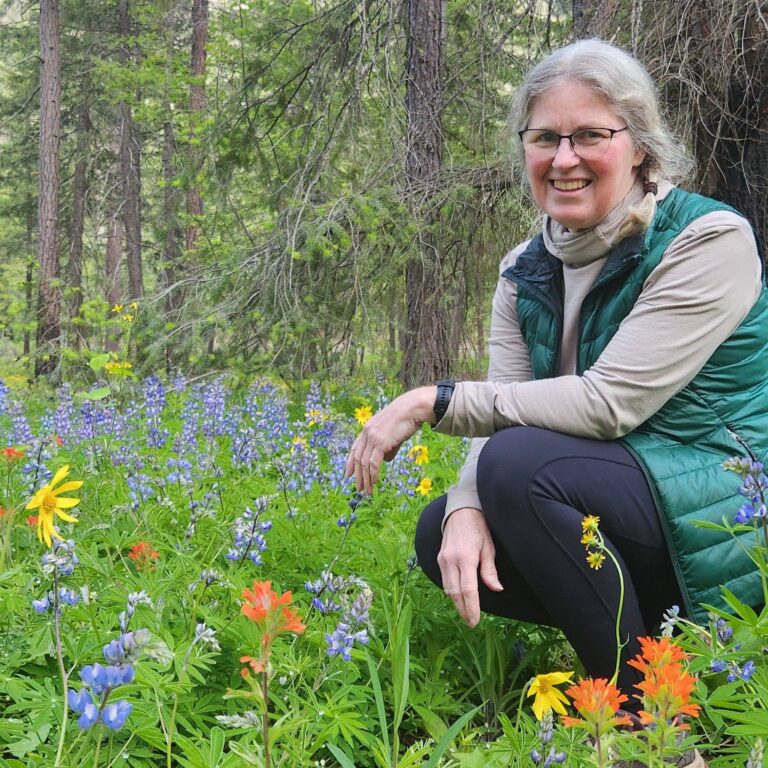
The first day of summer vacation may seem like a terrible time to hold a professional development workshop. Most teachers will have already started summer in their minds, even if their bodies are still present. But the 24 teachers from 11 Eastern Washington school districts who gathered for an in-person Food Systems workshop in June were made of sterner stuff.
“Given that this was literally the day after school ended for some of them, the level of engagement was wonderful,” says Michelle Grove, Regional Science Coordinator/Paraeducator Trainer, NWESD 189. “It was also poignant that [what they were learning] applied to K-12. The elementary teachers were appreciative that it wasn’t another content-focused workshop where they would then be tasked with, ‘how do I take this down to my grade level?’”
Grove and Lisa Phelan, Principal at Freeman Elementary School, contacted PEI about creating a professional development opportunity where Freeman teachers and those from surrounding districts could earn STEM clock hours and examine climate resiliency
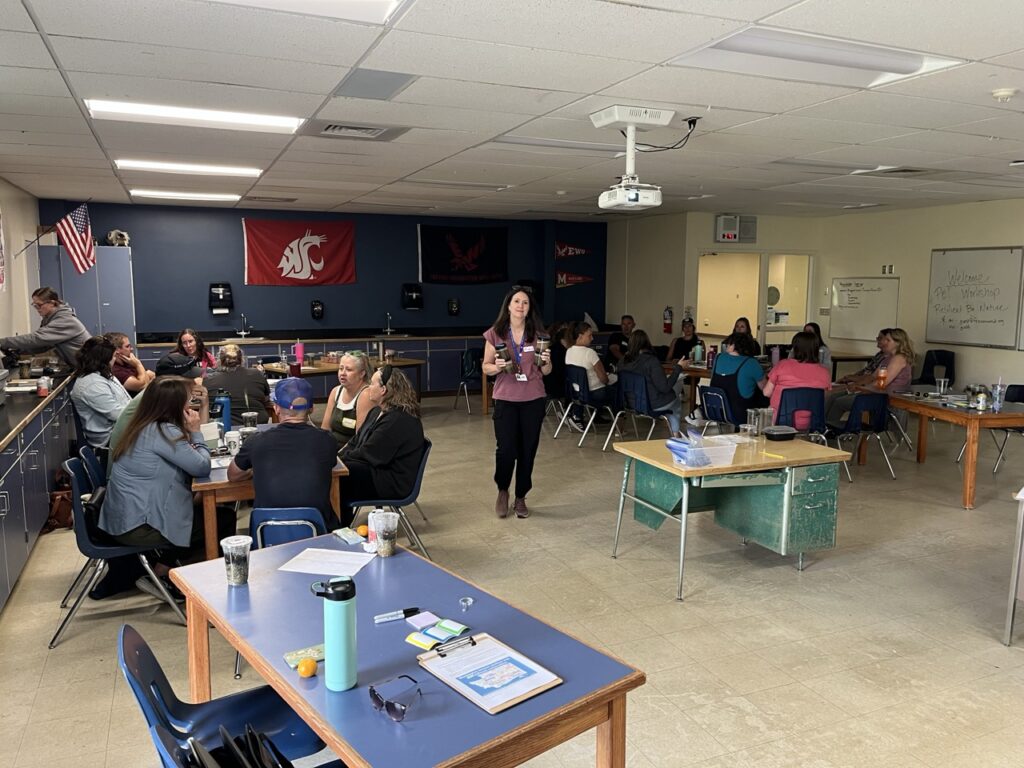
through the lens of local agriculture and food systems. NWESD provided most of the funding, with additional support from ClimeTime. Mike Allen, TOSA with Freeman School District, generously supported every aspect of the workshop day.
“Thank you for making understanding climate science real and relevant for the community I live in.”
— Workshop Participant
The workshop focused on the importance of soil health, how site conditions inform which crops or products can be grown, where Washington’s regional products end up, how food is lost throughout the production and distribution cycle, and what we can be done to prevent or minimize that loss. “Through topic discussion and activity practice, we followed the carbon journey through the regional food system from plants in the form of photosynthesis to soil, first as carbon sequestration in the ground and then post-consumer composting,” says PEI’s Eastern Washington FieldSTEM Coordinator Amy Dawley. “Considering ways to avoid food loss within the food system also provided a productive discussion topic.”
The link between food waste and climate change came as a surprise to participants.
“As with most adult learners, the idea of ‘where does the carbon come from’ is somewhat new learning,” Grove explains. “The idea that plants are built from carbon in the CO2 in air is not something they internalize. The exact role of soil microorganisms also brought a lot of new information to participants. They were also quite surprised to connect the dots between food waste and global greenhouse gases.”
Workshop highlights included creating ‘soil shakes’ to characterize soil texture and compare soil texture between various sites. Educators considered the many ways the activity could connect to content and be modified for their grade-level students. “The hands-on practice with a composting ‘recipe’ was also well received,” says Dawley. “Educators created mini composting units to take home and considered the inputs and outputs of a compost system. There were accessible math connections for both activities with percentages and ratios.”
The day ended with planning time for teachers to consider how they might implement food systems into their curriculum. “I heard talk of plans to work on schoolwide (elementary) food waste reduction, alongside the science of why it matters, a possible research project for better understanding the cost/benefit of regenerative ag vs traditional (and soil analysis in the two), and connecting the idea of carbon sequestration to the importance of maintaining/restoring prairies with a connection to tribal food sovereignty,” says Grove. “One specifically said, ‘Thank you for making understanding climate science real and relevant for the community I live in.’”