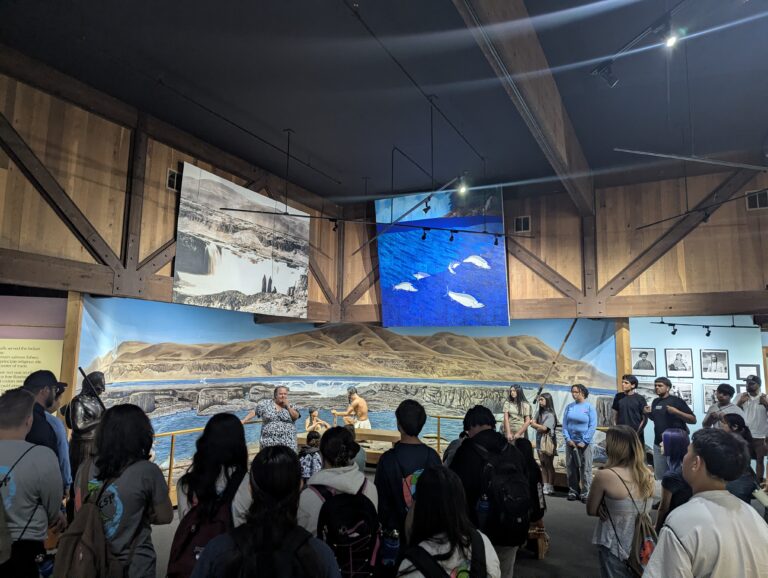
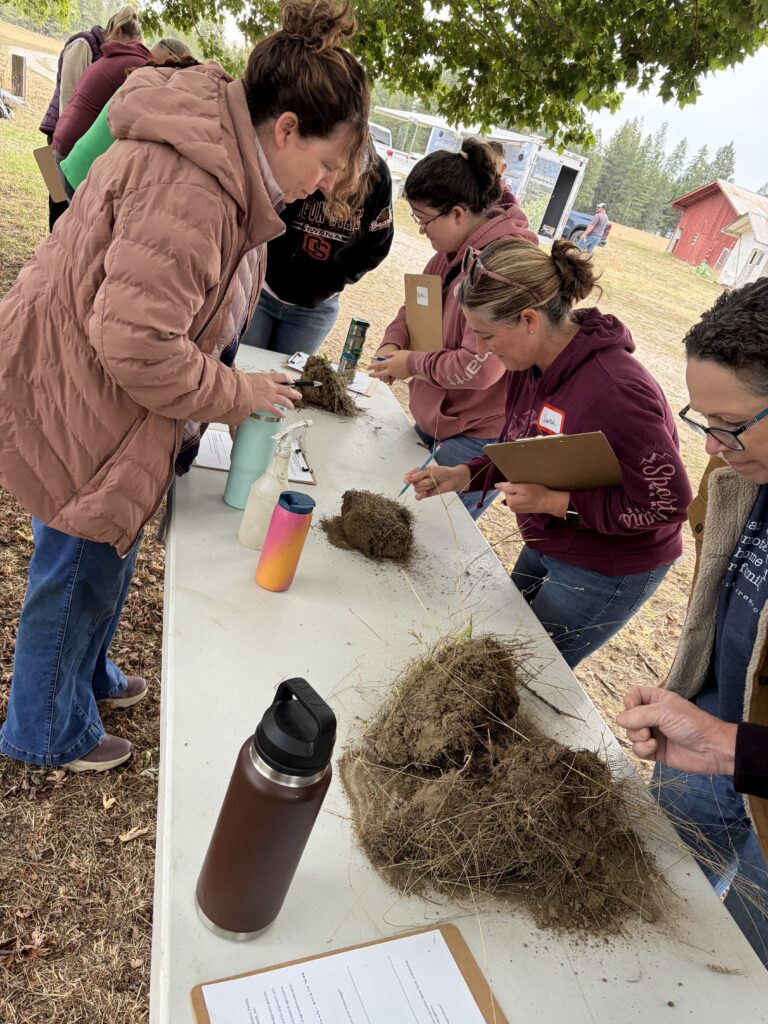
Hannah Gomes and Emma Sweazy are just freshmen at Onalaska High School, but they’ve already presented at a statewide conference, sharing their experience as part of the school’s aquaculture & fisheries Career and Technical Education (CTE) program.
“We want more people to know that this program is a lot different from any other classes in school,” says Sweazy. “It’s more hands-on. It’s not just sitting down in a classroom, it’s getting people outside.”
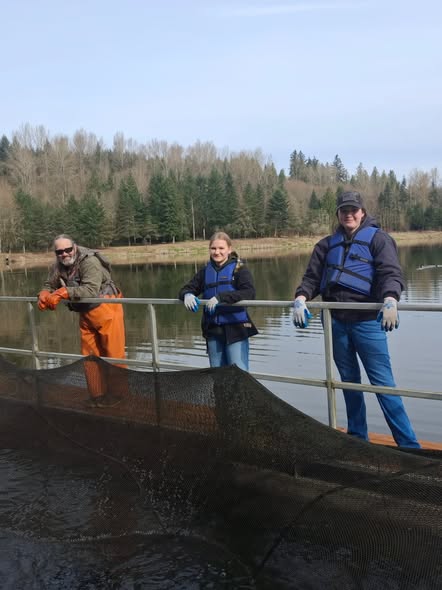
On March 31, students in the course released 75,000 coho salmon and 20,000 steelhead trout, all raised on campus, into nearby Gheer Creek. Fish hatchery specialists from the Washington Department of Fish & Wildlife were on hand to support and monitor the process, and students from local elementary and middle schools took time out from class to attend.
Kevin Hoffman teaches the course, along with woodshop and metal shop classes at the high school. He sees the value in authentic learning with embedded natural consequences. “These types of project-based learning opportunities provide real and tangible experiences for students,” he maintains. “Instead of just reading about something or hearing about it, they’re learning the cause and effect of things firsthand, how to move fish, how to apply an electrical line and get the pump running, how to catch fish in a net. They benefit greatly.”
“We want more people to know that this program is a lot different from any other classes in school. It’s more hands-on. It’s not just sitting down in a classroom, it’s getting people outside.”
— Onalaska High School Student Emma Sweazy
Hoffman has also been the lead teacher for PEI’s Youth Engaged in Sustainable Systems (YESS) program, which the district is now offering for the third year. YESS is a three- to six-week summer program for high school students that combines classroom learning with time in the field, where students gain skills in restoration ecology, forest management and water systems management from local industry professionals while earning academic credit, a stipend and an Industry Recognized Credential (IRC). The Onalaska YESS program focuses on aquaculture and fisheries and builds on the knowledge that students have already developed through the CTE course.
Both the longer course and the YESS program provide opportunities for students to explore potential careers in natural resources. “They take things they’ve learned in the classroom and go apply those in real life,” says Rep. Dean Orcutt. Orcutt represents the 20th legislative district, which includes Onalaska, and he has attended multiple fish release events with Hoffman’s students. “It’s a great opportunity to learn skills they can take with them and turn into careers.”
Emma Swayze is a sophomore who has participated in both the longer CTE course and the YESS program. “I think the biggest benefit is that we get people out to clean and maintain the fish tanks and we learn how to work with fish,” says Swayze. “We also use tools we’ve never used before and help the community by making whole areas better.”
PEI’s Aquaculture & Fisheries CTE frameworks are freely available and adaptable to any school district statewide, but thus far, the Onalaska district has made the most use of them. Rep. Peter Abbarno, also of the 20th legislative district, hopes to see this type of programming become more widespread. “There are so many immeasurable benefits to the CTE program, not only here in Onalaska but throughout the state of Washington,” Abbarno says. “All the skills they learn, the industry certifications they receive through the summer program, these are just great opportunities for our students.”
KeyBank provided funding for 2025 Onalaska School District YESS program.
Learn more about PEI’s Introductory and Advanced Aquaculture & Fisheries frameworks here:
https://pacificeducationinstitute.org/resource/cte-introduction-af/
https://pacificeducationinstitute.org/resource/cte-advanced-af/