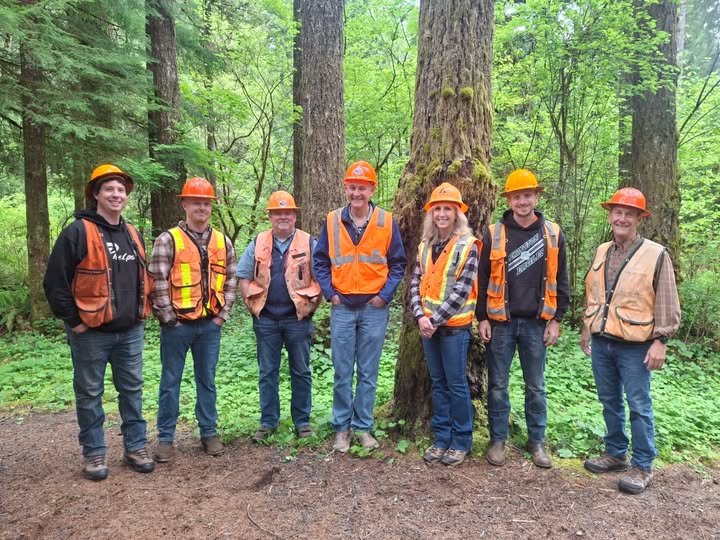
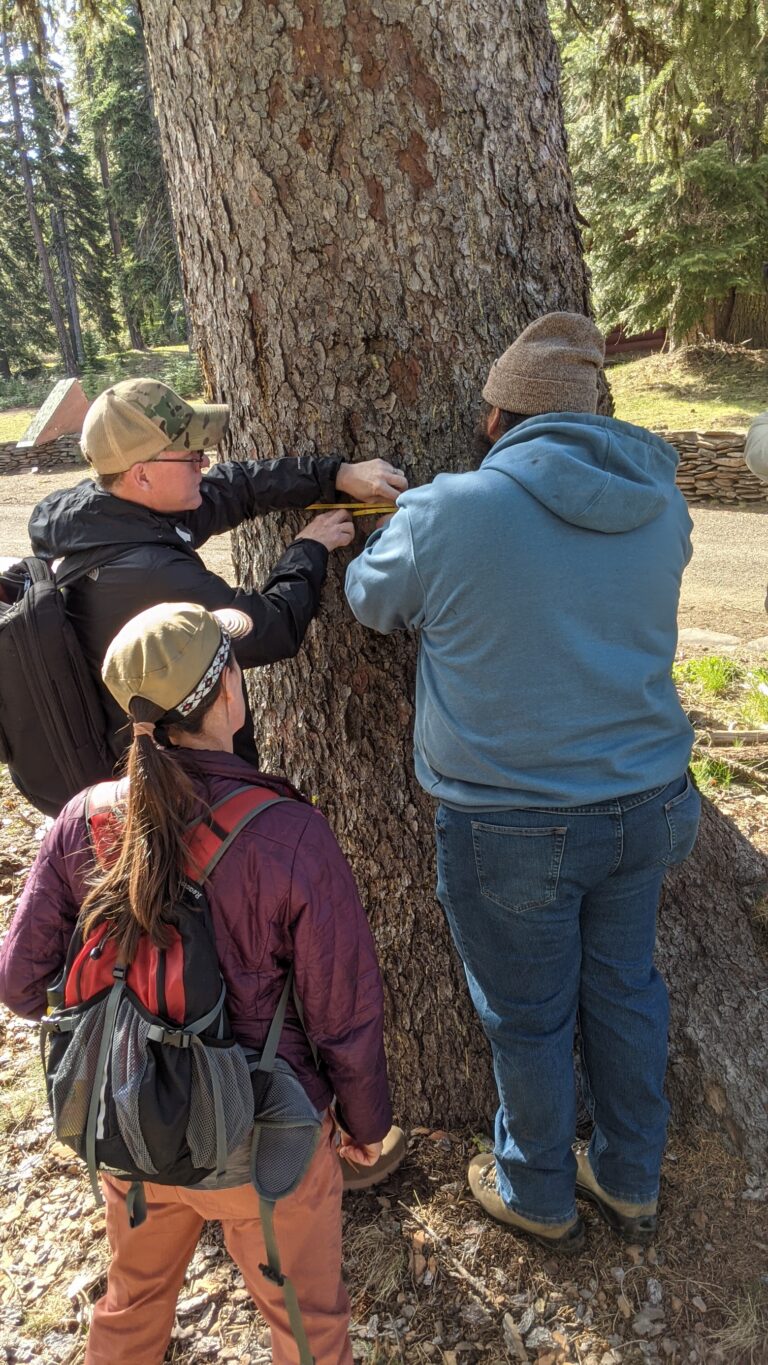
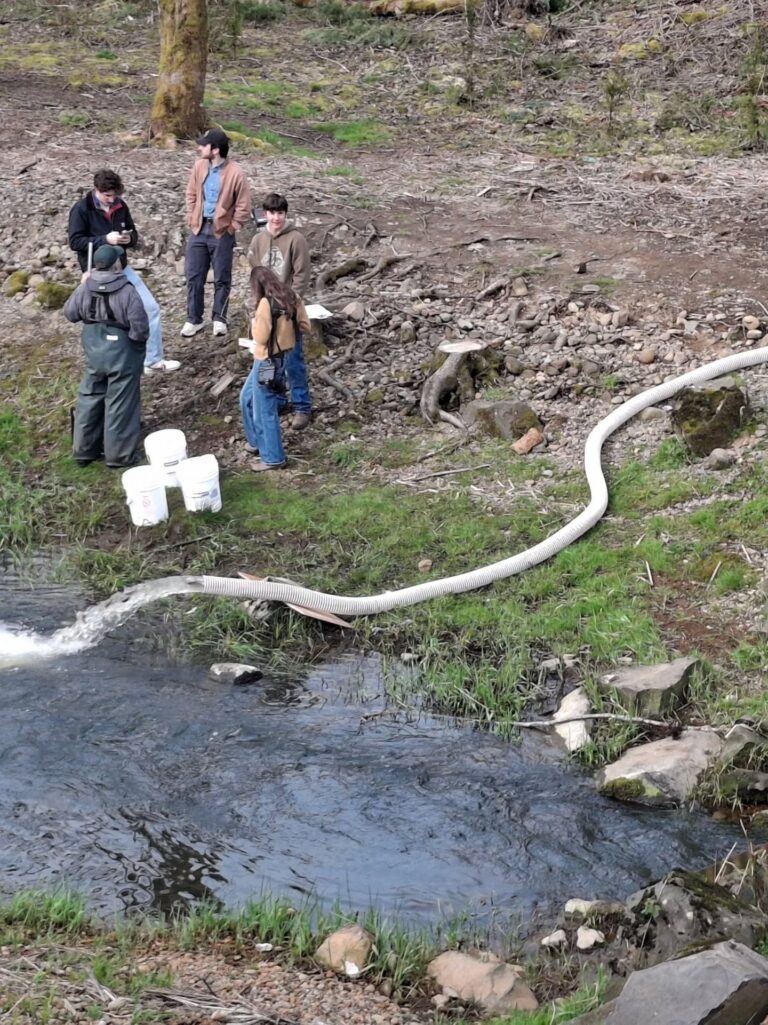
Tricia Goode has heard the message before: find community partners to supplement your classroom instruction. Often, it comes with no practical tips on where to look or how to get started. Fortunately, during a Forest as a Classroom Workshop in Yacolt Burn Forest this May, she found herself surrounded by industry experts and was able to put that recommendation into practice.
“I’m very excited to make these connections with forestry professionals,” says Goode, a science teacher at McLoughlin Middle School in Vancouver. “My students are in a very urban school and don’t have many opportunities to get outside. I’m trying to grow that connection to nature.”
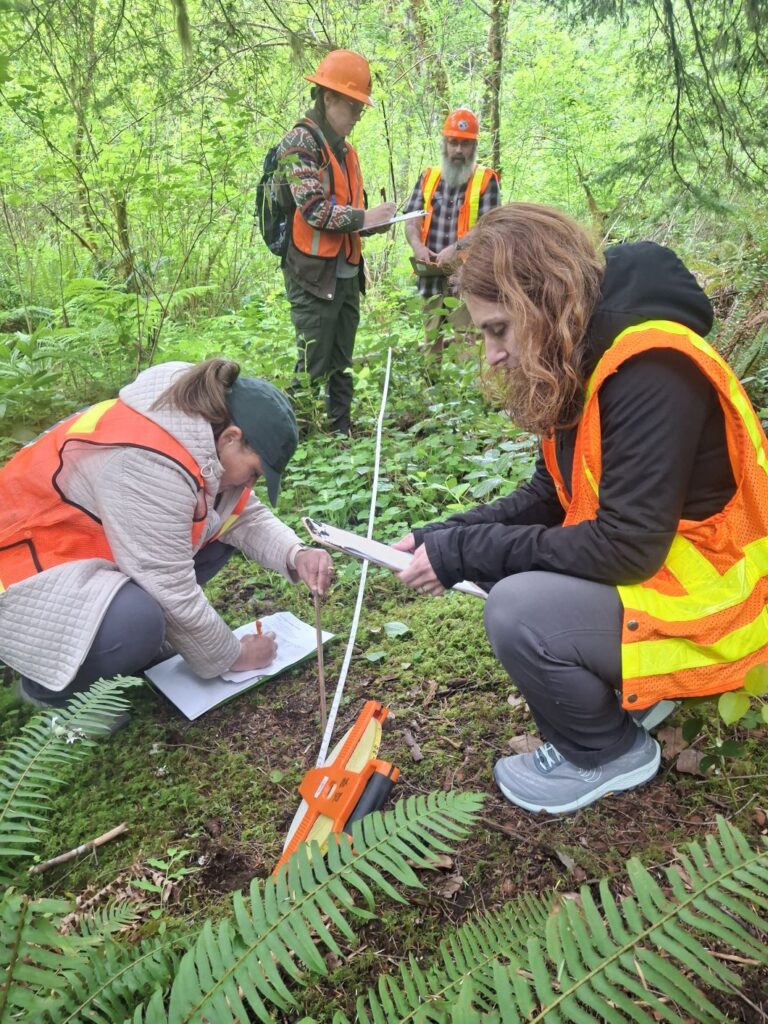
Goode and eleven other Southwest Washington educators attended a Forest as a Classroom workshop in Yacolt Burn State Forest on May 19. Participants spent a full day visiting working forest sites, learning about forest management and experiencing forest education lessons and activities. PEI’s Lower Columbia FieldSTEM Coordinator Emily Newman and Washington Department of Natural Resources (DNR) Youth Education & Outreach Program Regional Coordinator Kelly Sullivan co-facilitated the course, which included multiple partners representing various aspects of forest management.
“Having all of those partners come together has really been instrumental in sharing about forestry and the complexity of what it takes to manage lands for profit, but also manage them for recreation and for the community,” says Newman.
Yakama Nation Department of Natural Resources Forest Operations Manager Ryan Sanchey shared information on how tribal forestry is both similar to and different from state or public/private land management, including historical background on the Yakama Nation’s cultural practices around fire as a mitigation tool. DNR’s Sullivan explained how the state manages for fire while balancing public needs for recreation and timber.
“It’s been so valuable to talk with these professionals and think about what I’ll be taking back to the classroom. It’s been an amazing day.”
— Ridgefield High School CTE Teacher Emily Whitton
“It’s difficult for educators to find the time and budget for outdoor education,” says Steve Ogden, DNR’s Assistant Regional Manager for the State Uplands Program in the Pacific Cascade region. “That makes it so important that we have landowners and forest practitioners who partner with PEI and can provide good information. I hope our participants take away from today how complex forestry and natural resources management are.”
That message hit home for Ridgefield High School CTE science and biomedical science teacher Emily Whitton. “It’s been interesting to hear that there has to be this harmonious balance,” she says. “We need the forest to be sustainably and responsibly managed and there are all kinds of trade-offs to create that balance. It’s been so valuable to talk with these professionals and think about what I’ll be taking back to the classroom. It’s been an amazing day.”
Industry partners and PEI also provided strategies for teachers to help their students explore career pathways in forestry, wildland fire, and recreation. According to Michelle Metcalf, Environmental Manager for Weyerhaeuser – Western Timberlands, many students don’t realize how much science is involved in forestry. “I hope that teachers can convey the excitement of this work,” she says. “There are entry-level jobs in forestry that don’t require a college degree. Workshops like this are important for spreading that message.”
Weyerhaeuser, Rayonier and DNR funded the workshop, with lunches provided by Smurfit Westrock.