Birdwatching is never a sure thing, especially in the Pacific Northwest in December. Throw in an atmospheric river dumping record levels of precipitation and the odds of observing local species in their natural habitat drop dramatically, as participants in a recent workshop learned when their outdoor bird observation activity transformed into an indoor classroom project.
‘Birds as a Window to Science: Observing, Understanding and Teaching the Local Avian World’ is the first of the 2025-26 Taking Learning Outside (TLO) workshop series. Originally, the first activity was scheduled to be a lesson on adjusting binoculars for different visual ranges, followed by outdoor bird observation. Instead, Vancouver Audubon Society board members Ken Pitts and Becky Boley adapted to the circumstances.
“These outdoor learning courses are my favorite professional learning courses. I appreciate them being offered and always get something out of them and enjoy them.”
— Workshop Participant
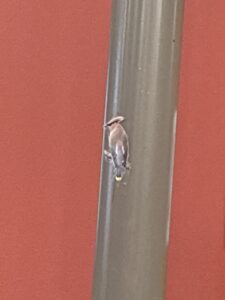
“It was 4:30 p.m. and an atmospheric river was happening, so there was very little light,” says Emily Newman, PEI’s Lower Columbia FieldSTEM Coordinator. “The facilitators modified the activity to photos of birds on sticks throughout the room that people could focus on through binoculars.”
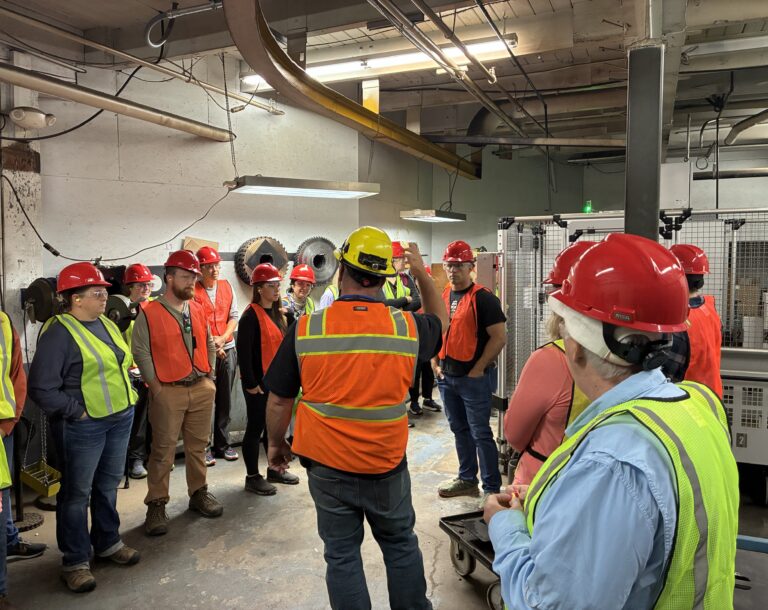
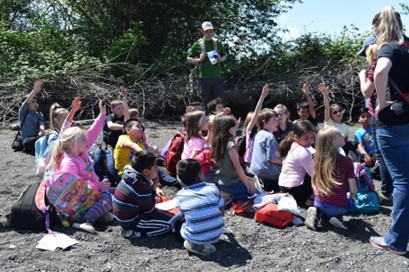
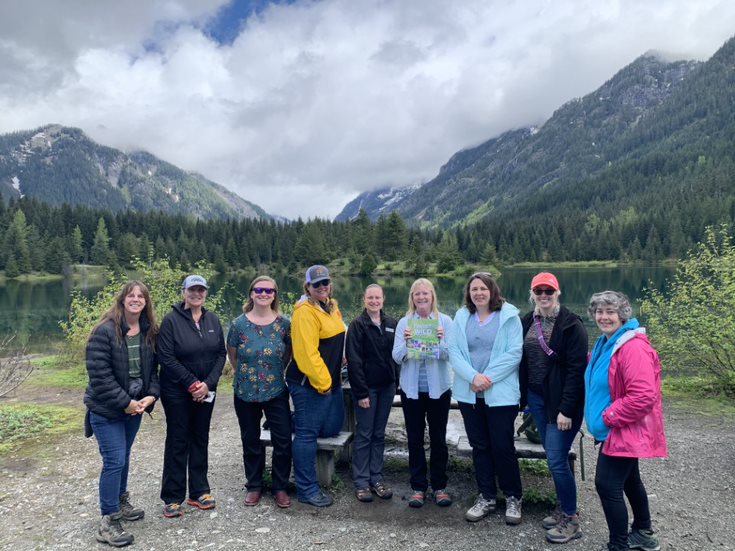
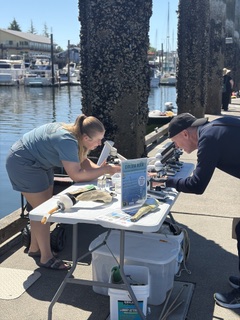
The workshop is a new addition to the TLO series, now in its third year. Over the school year, Southwest Washington teachers connect with community partners, including Lower Columbia School Gardens, Lower Columbia Nature Network, PEI and WSU Extension Master Gardener Program, to explore engaging and practical outdoor learning practices. This year’s series is a combination of previously offered courses and new curricula.
“We did surveys at the end of the last series to identify the topics people wanted to learn more about,” Newman explains. “Habitat was one of those topics, along with ways to use your school grounds for outdoor learning outside of school gardens.”
At this workshop, participants downloaded birding apps and explored how they contribute to citizen science before launching The Migration Game, which puts players in the role of migratory birds navigating both natural and human-caused disruptions. Participants encountered challenges like running into buildings, landing in fields covered with pesticides, or getting confused by light pollution. The consequences ranged from having to circle a table an extra three times, thereby lengthening the migration route, to dropping out of the game altogether, indicating birds that didn’t survive.
Post-game, ESD 112’s Regional Science Coordinator Stacy Meyer led the group through a discussion of how to apply Next Generation Science Standards (NGSS) and climate science to birds. Educators were disturbed to learn that three billion bird deaths have resulted from factors affecting migration patterns since 1970.
“We talked about how the Anna’s hummingbird used to only migrate as far as northern California, and now it goes all the way to British Columbia because of temperature change,” says Newman. “There are strong connections between observing birds, climate change, and human interactions.”
Teachers are already looking forward to the next workshops in the series, which will focus on preparing school gardens, trees and urban ecosystems, native species, pollinators, and schoolyard stewardship. “These outdoor learning courses are my favorite professional learning courses,” reported one participant. “I appreciate them being offered and always get something out of them and enjoy them.”
Register for the next workshop ‘Beyond the Classroom: Planning Outdoor Spaces that Support Learning’ here.