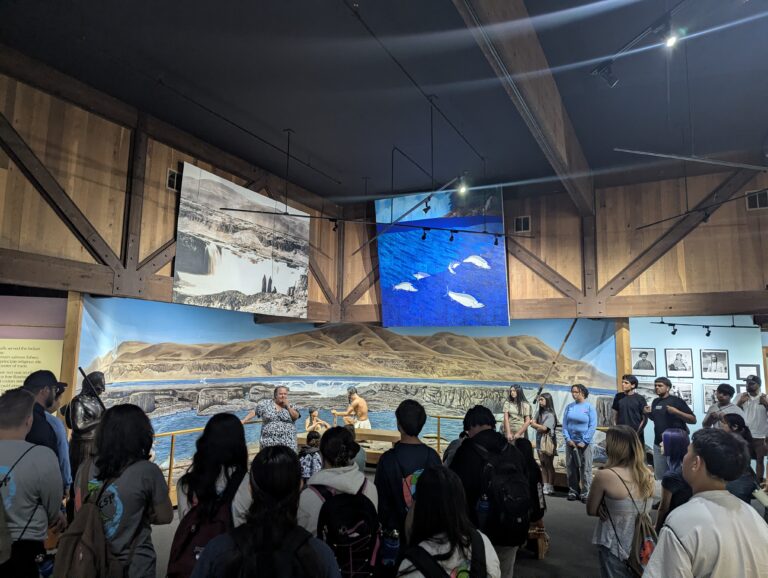
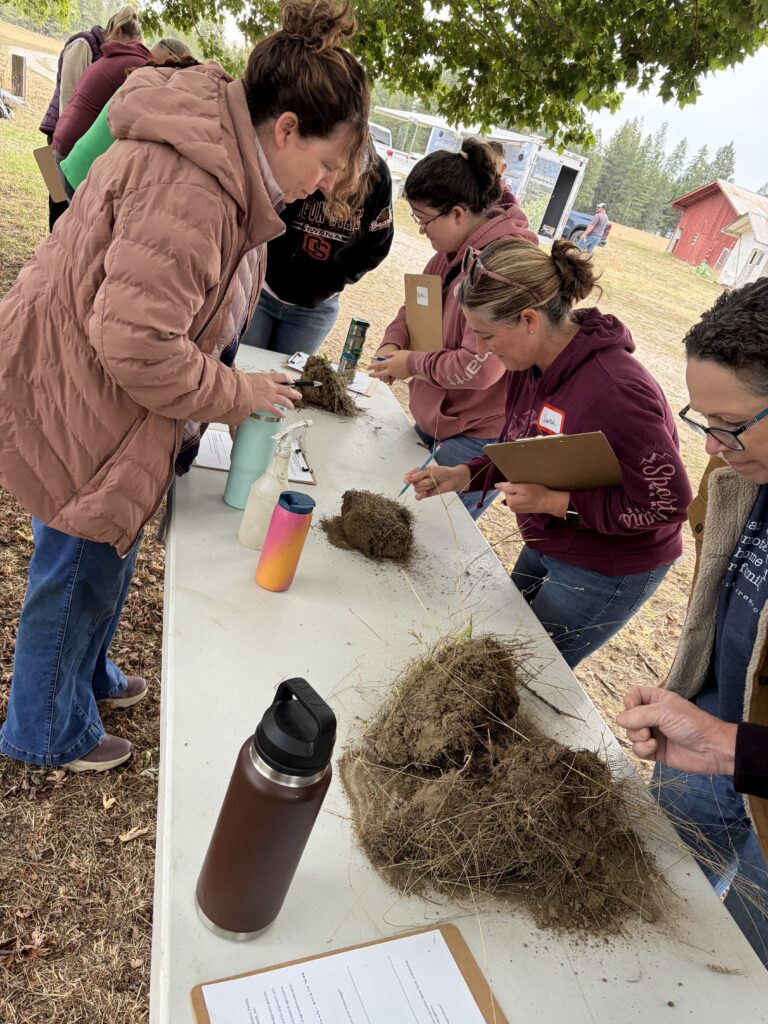
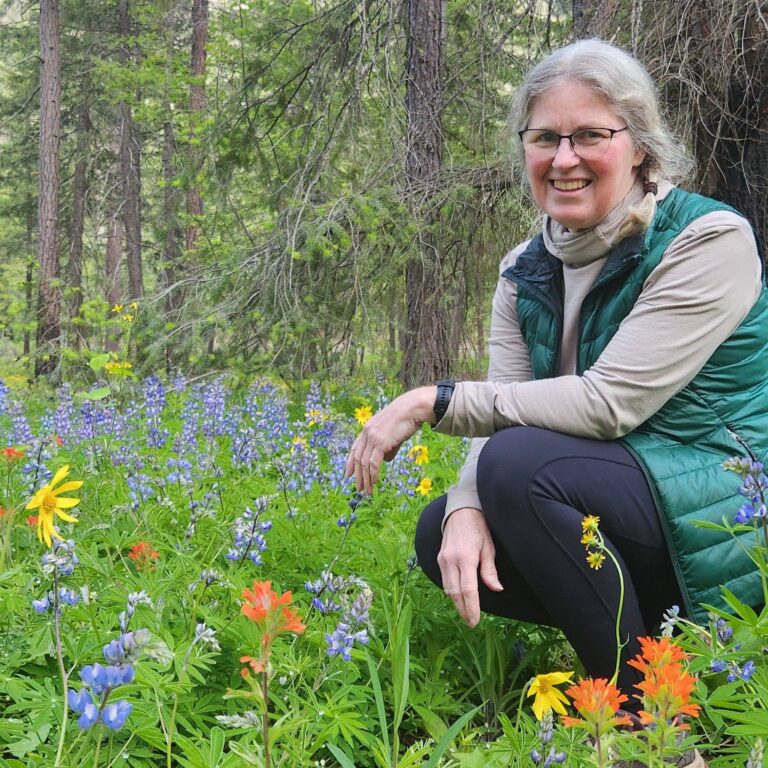
Wildlife is an inherently interesting topic for students of all ages, whether they’re learning about minor fauna like bees or ‘charismatic megafauna’ like bears. It turns out that adults find these subjects pretty fascinating, too, especially when provided with tools for teaching about conservation issues in Washington State. For over a decade, PEI and the Washington Department of Fish & Wildlife have collaborated to deliver those tools, along with opportunities for teachers to explore the natural world outside their classrooms with students.
“We hope teachers feel the Wild Washington curriculum workshops make teaching science easier,” says Autumn Eckenrod, Conservation Education Curriculum Developer for WDFW, “and they come away with a belief that place-based conservation science instruction is doable, important and beneficial for students and the community.”
“WDFW units are SO engaging and interesting for kids. The potential for learning and growth is very high because of all the time, attention, and expertise invested.”
— Workshop Participant
In the last year, PEI and WDFW have offered six collaborative workshops regionally and statewide, covering topics such as baby wildlife, biodiversity and pollinators, the state of salmon and bilingual wildlife science. The partnership benefits both organizations by supporting their respective missions. “We have shared goals,” says Eckenrod. “PEI has helped us connect with teachers who have previously had no interaction with WDFW.”

PEI’s Eastern Washington FieldSTEM Coordinator Amy Dawley notes that WDFW’s materials lend themselves perfectly to the FieldSTEM model. “WDFW has been building a robust library of wildlife-related curriculum units through its Wild Washington initiative,” says Dawley. “These high-quality instructional materials support educators in encouraging student-led learning for an outdoor, place-based wildlife theme. Autumn’s creative and inquisitive approach and dedication to supporting student-led learning are evident in the Wild Washington curriculum units.”
Teachers also benefit from the curriculum’s student-led, integrated approach, according to Eckenrod. “They’re interested in how place-based learning can ignite student interest and their questions can drive the rest of the unit.” Wild Washington units are interdisciplinary, and teachers have appreciated the opportunity to teach science with English Language Arts (ELA) and Math integrations.
“I’m really excited to use this with my K-2 students at school,” reported one Baby Wildlife workshop participant in a post-session evaluation. “This is laid out so well and integrates into so many other content areas.”
“WDFW units are SO engaging and interesting for kids,” another shared. “The potential for learning and growth is very high because of all the time, attention, and expertise invested.”
Wild Washington materials include cultural connections with the Since Time Immemorial (STI) curriculum, and units are available in both English and Spanish.
Dawley notes that teachers appreciate the focus on an aspect of Next Generation Science Standards (NGSS) that can be confusing: three-dimensional learning, a holistic approach that integrates disciplinary core ideas, crosscutting concepts (ideas that connect different science disciplines) and scientific and engineering practices.
PEI and WDFW will be offering a Wild Washington: State of Salmon workshop on February 24 and 25 for third-grade teachers. Later this spring, they’ll conduct a workshop focused on Baby Wildlife, and then in the fall on the European Green Crab and its impact on local marine systems. A new WDFW curriculum of kindergarten resources for habitats in Washington is coming soon, says Eckenrod.
“We want people to know that all of the Wild Washington units and lesson plans are open source, which means they are free,” she says. “Both the unit plans and materials are available in English and Spanish. Also, we want to hear about how teachers are using Wild Washington resources. If you have a student conservation story you would like to share, please contact us!”
Email [email protected], or share your feedback here: Wild Washington lesson feedback form | Washington Department of Fish & Wildlife