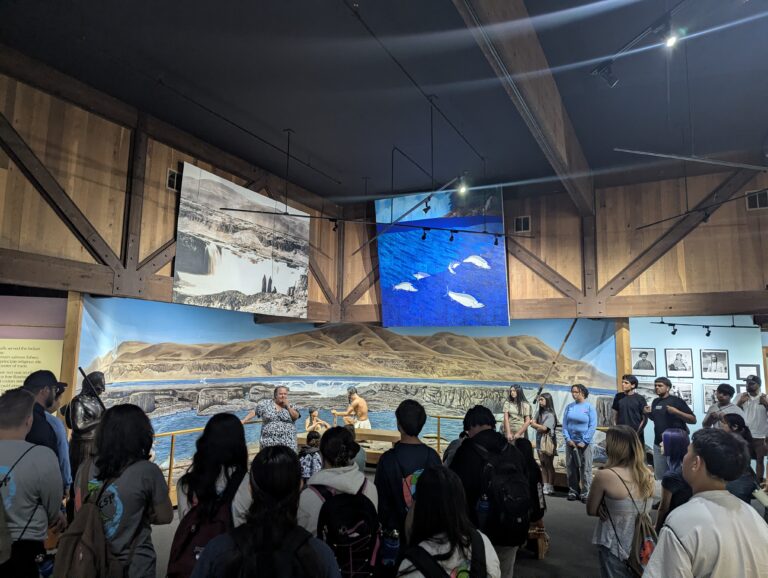
and Nisqually Tribal history.
A common perception among educators is that taking instruction outdoors will lead to increased behavior issues and challenges with classroom management. In addition, many educators are not comfortable in nature. These fears actively prevent teachers, even those who understand the value of outdoor education, from taking learning beyond their classroom. As one teacher at a PEI Schoolyard Investigations workshop explained, “I used to think that taking kids outside would be chaos.”
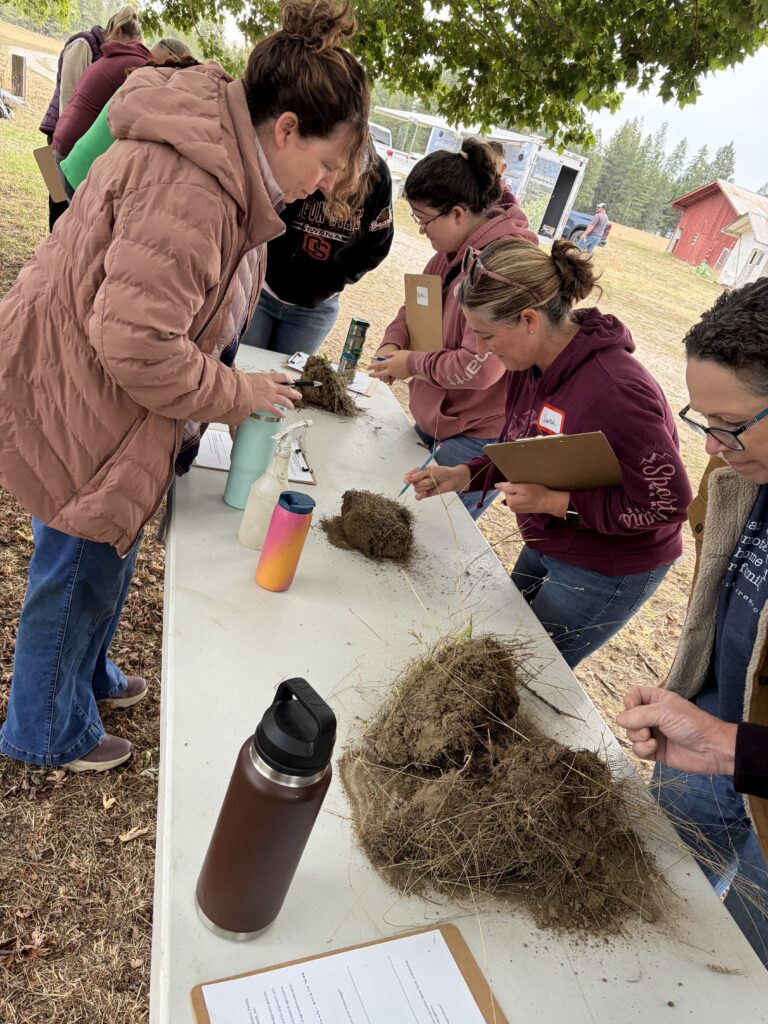
The issue isn’t lack of knowledge but lack of experience. Simply providing resources and strategies for outdoor education isn’t enough. A University of Maryland study found that even among elementary school teachers who described themselves as confident in teaching in and about the environment, less than half actually took students outdoors for instruction. The research team concluded, “These findings provide compelling evidence of the need to incorporate direct experiences and practice when shaping environmental literacy teacher professional development.”
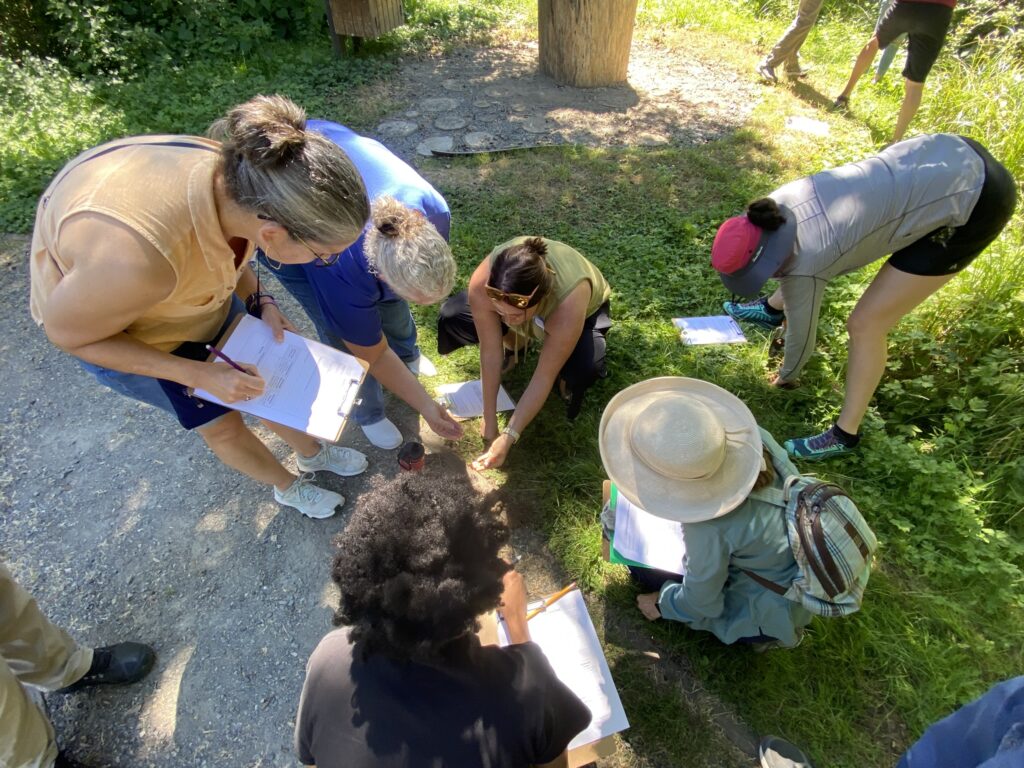
Building teacher comfort and confidence has always been a focus of PEI workshops, whether individual trainings for skills like Fostering Observation Skills and High Impact Field Experiences or customized professional development with schools and districts. As part of a strategic restructuring, we have identified Teacher Confidence and Efficacy as a core outcome of PEI programs.
While time, administrative support, access, and safety all affect the implementation of outdoor and environmental education, PEI Associate Director Megan Rivard says the organization can have only limited influence over those factors. “We can have a much greater influence on teacher confidence through professional learning, consultation, and sustained mentorship.”
“You can start with the same thing you would normally be doing indoors and taking it outside at the substitution level. Taking that first step grows confidence. Teachers realize that they changed their setting and it wasn’t a disaster. Start where you’re at. You don’t have to jump from zero to 100 – just take it in stages.”
— Cascade School District Superintendent Tracey Edou
A 2025 University of Munich study examined the role of self-efficacy (a belief in one’s ability to succeed in a specific situation or accomplish a specific task) in integrating sustainability into teaching. Researchers found that high self-efficacy was closely tied to frequent classroom implementation. They concluded that, “First, educational policymakers and institutions should prioritize the integration of outdoor education into teacher training curricula, with an emphasis on experiential, sustainability-focused approaches. Second, professional development programs must go beyond theoretical frameworks and include practice-based, reflective, and collaborative components that enhance teachers’ confidence and adaptability in diverse educational settings.”
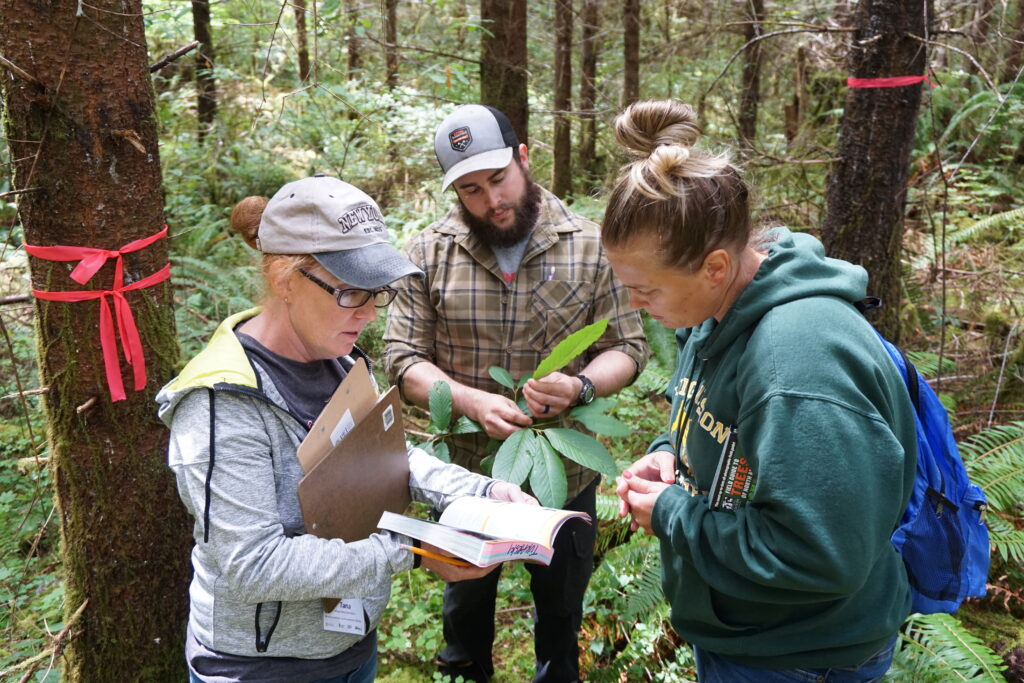
PEI’s workshops and mentoring provide the experiential base that teachers can leverage into increasing efficacy.
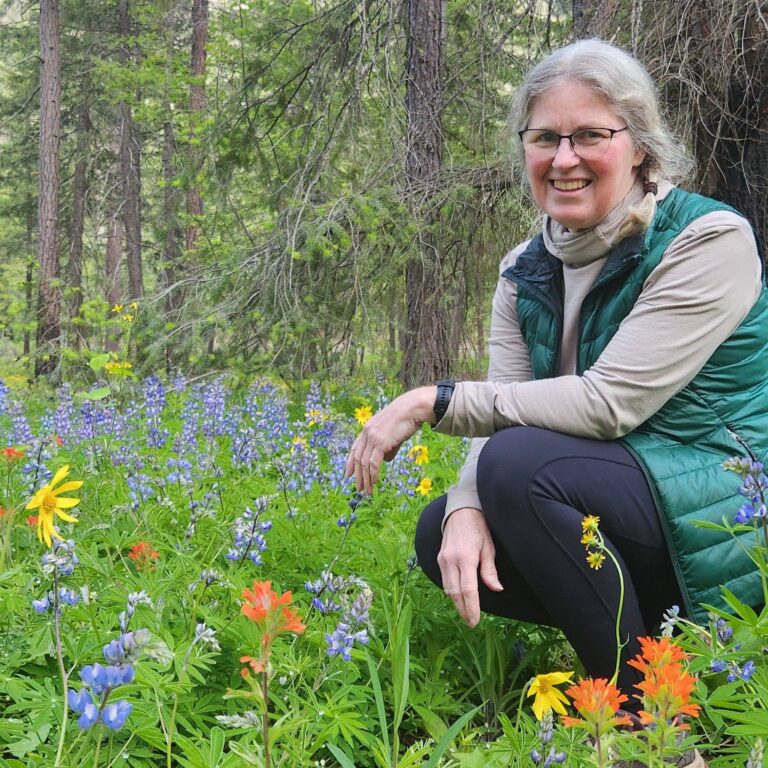
Kristin Edlund has been helping educators develop confidence to take learning outdoors for decades as Assistant Director of Teaching and Learning at Riverview School District. She emphasizes the importance of supporting teachers and setting them up for success, especially during their initial forays.
“Keep those first sessions short and structured,” she says. “It can be as simple as, ‘We’re going to go outside and draw the first natural thing you see for one minute, and then we’re going to come back and talk about it.’ If teachers aren’t prepared, the first time they go outdoors they’ll go too long and if the first attempt doesn’t work, you’ve lost them.”
Cascade School District Superintendent Tracy Edou agrees, suggesting that educators apply the SAMR model (substitution, augmentation, modification, re-design) to outdoor learning. “You can start with the same thing you would normally be doing indoors and taking it outside at the substitution level,” she explains. “Taking that first step grows confidence. Teachers realize that they changed their setting and it wasn’t a disaster. Start where you’re at. You don’t have to jump from zero to 100 – just take it in stages.”
Setting outdoor learning expectations is also key. Edlund has been attending PEI workshops for over two decades and recalls one piece of advice that stuck with her. “PEI taught us the power of a placemat,” she says. “Bring a placemat for every kid and let them know, ‘You’re going to stay on your spot.’ A laminated piece of paper or a placemat can contain a kiddo who needs a bit more boundary or structure. You can teach them what it looks like to go outside as a scientist and not for recess. Ask, ‘How do scientists act?’ or have a field journal prompt, activities that keep their bodies busy as well as their minds.”
Once a teacher has developed confidence, they can have a ripple effect on other educators and their administration, especially when they see students known for behavioral challenges become engaged and cooperative in an outdoor setting.
“Seeing is believing,” Edlund points out. “When you have the most challenging kids in the building performing rigorous academic work outdoors, that makes a believer out of most people. A confident teacher can lead the rest of their team and show them things to practice ahead of time before they go outdoors.”
While administrative support is never guaranteed, Edou recommends inviting administrators to observe outdoor lessons. “Administrators are in the business because they love kids,” she says. “Put out the personal invitation, because administrators are very busy. It’s a great way to build support.”
Administrators who see the value of outdoor learning can develop school- or district-wide goals for outdoor learning and create mentorships where more seasoned educators support those newer to it. On an individual level, this might look like a fellow teacher or administrator accompanying them during their first outdoor experiences. “Find someone who understands why it’s important for kids to be there,” says Edlund, “and why these experiences can be so engaging for the kids who are often receiving consequences or punishment.”
As for that teacher who attended a PEI workshop, the workshop did its job. By the time it was over, her fears of chaos had turned to anticipation. “Now I think I can make expectations clear,” she reported, “and my students will be more engaged than they are in a classroom.”