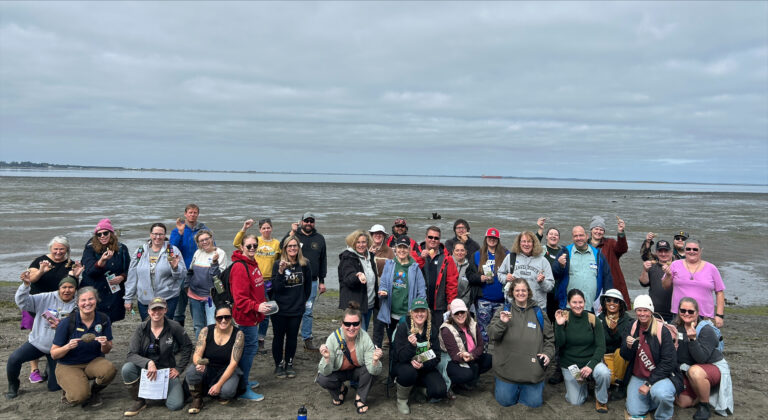
You don’t have to be a biologist to teach students about European green crabs. That was one key takeaway for 28 educators who attended PEI’s Field as a Classroom: Investigating European Green Crabs in Grays Harbor County workshop at Westport Maritime Museum in September. Grays Harbor Community Foundation funded the workshop.
European green crabs are an invasive species that can have significant impacts on coastal ecosystems, including native species, eelgrass habitats, and shellfish populations. In Washington State, they damage eelgrass beds and salt marsh pocket estuaries, which serve as nurseries for juvenile fish and other crabs, which harms forage fish and salmon recovery. This, in turn, impacts species like the Southern Resident orcas.
“This is an issue happening right here in Washington, and it’s a great opportunity for students to investigate a real-world environmental challenge that affects their communities,” says Emily Newman, PEI’s Lower Columbia FieldSTEM Coordinator. Newman co-facilitated the September workshop and collaborated with the Washington Department of Fish & Wildlife (WDFW) to offer a virtual workshop for statewide educators at the end of October.
“I’m excited about where those conversations might lead. There’s a real opportunity to connect students across Washington with meaningful, place-based learning that contributes to their understanding of coastal ecosystems and the communities working to protect them.”
— Emily Newman, PEI FieldSTEM Coordinator
The September workshop brought together an incredible group of partners: Dr. Emily Grason of Washington Sea Grant; Lindsay Walker and Mikaela Legarsky of Washington Department of Fish & Wildlife; Scott Mazzone of the Quinault Indian Nation; Olivia Britain of Grays Harbor Conservation District; Kyle Deerkorp, Regional Operations Manager – Coast, Farms and Hatchery with Pacific Shellfish/Pacific Seafood; and Derek King, Farm Director with Shoalwater Seafood/Willapa Bay Enterprises and PEI Board Member. “Together, these partnerships help educators see how an environmental challenge can be explored from multiple perspectives and connected to real work happening in their communities,” says Newman.
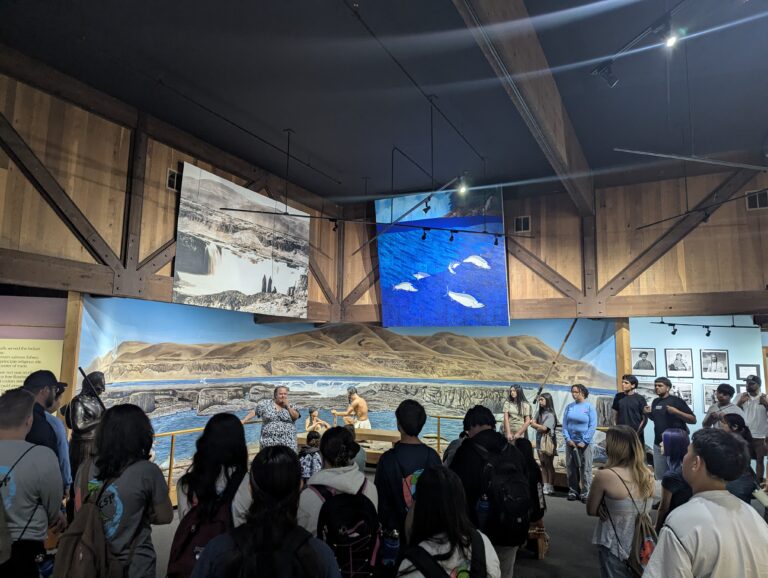
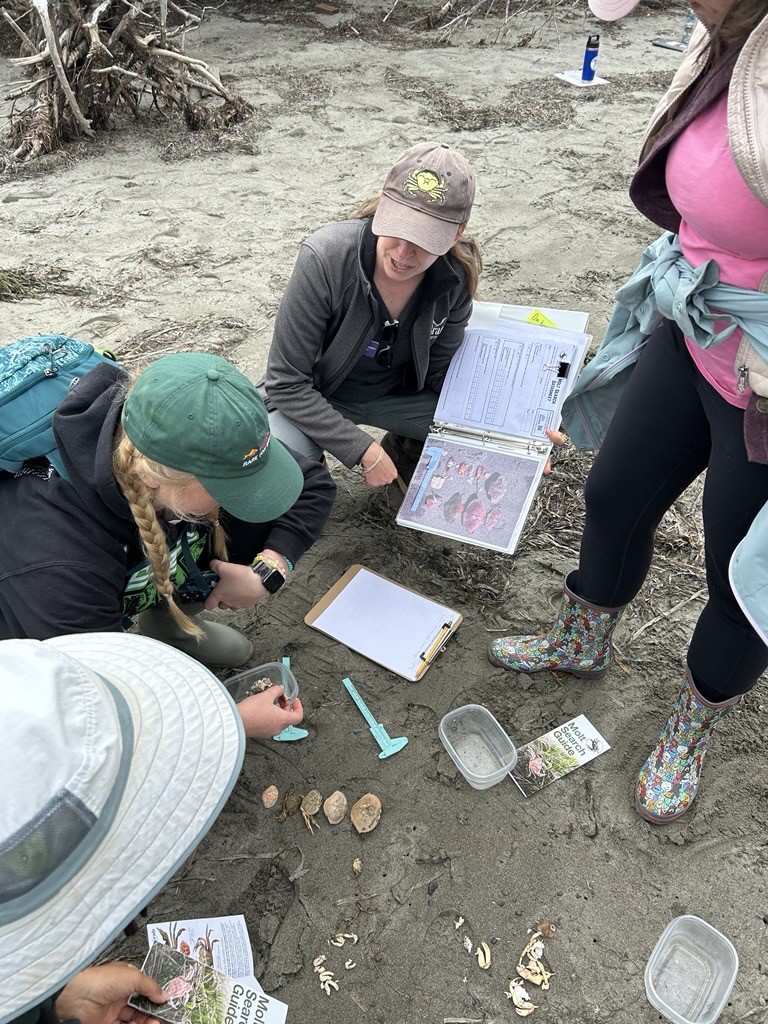
Educators began by investigating European green crabs as a local phenomenon before heading to Bottle Beach for a hands-on molt search. The day also included community perspectives, exploration of WDFW’s Green Crab Alert curriculum and learning about the Quinault Indian Nation’s green crab trapping and management efforts.
According to Newman, feedback provided through post-workshop evaluations demonstrated how much educators valued actually getting outside and participating in the learning themselves. Twenty-three educators identified hands-on learning as a key takeaway, and the same number highlighted outdoor learning.
One educator shared, “I used to think the idea of taking students outside was overwhelming. But now I think I want to take my kiddos outside for hands-on learning ASAP!”
Another said, “Learning about a teaching activity vs. actually doing it means that I will be more apt to do this with my students.”
“I think those comments really capture why these workshops matter,” Newman maintains. “When educators experience the investigations themselves, they begin to see how they can bring that same learning to their students. They also leave with connections to scientists, community partners, and resources that can help make it happen.”
Both teachers and students have opportunities to participate in citizen science focused on monitoring and eliminating European green crabs. Through programs like Washington Sea Grant’s Molt Search, students can learn to identify green crab molts, make observations, and contribute information that helps scientists understand where green crabs may be present.
Students can also analyze existing monitoring data, investigate coastal habitats, communicate what they’ve learned, and share information with their communities. Not every school has access to the coast, but there are still meaningful ways to engage with the science. “I love the idea that students can move beyond just learning about an environmental issue to understanding how they might contribute to the work happening around it,” says Newman.
Educators left the workshop excited about bringing this learning to their students, but they also identified barriers like transportation, access to outdoor learning spaces, and connections with community partners.
PEI is continuing conversations with WDFW, Washington Sea Grant, and other partners about how we can make existing resources more accessible and potentially create more coordinated opportunities for students to engage in community science.
“I’m excited about where those conversations might lead,” Newman says. “There’s a real opportunity to connect students across Washington with meaningful, place-based learning that contributes to their understanding of coastal ecosystems and the communities working to protect them.”