
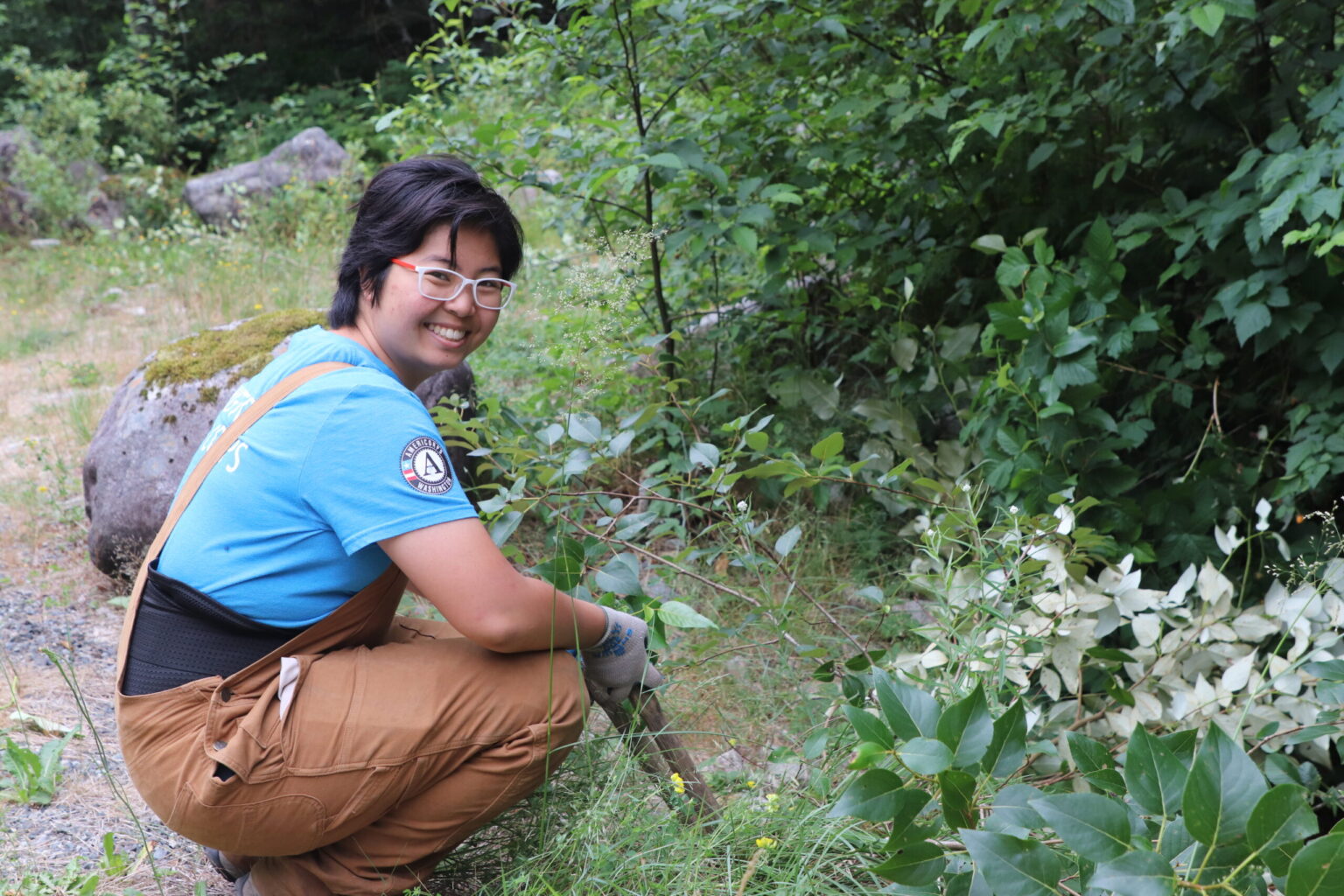
PEI has developed a series of hands-on high school Career and Technical Education (CTE) frameworks that align to agriculture and natural resource (ANR) industry needs, K-12 standards, and dual credit with Washington State colleges. Upon completion of each course, teachers provide students with a signed Industry Recognized Credential (IRC) that rates their proficiency in a variety of job-related skills that have been identified by industry partners.
PEI’s teacher resources and professional learning support teachers as they develop and lead each course.
Based on a longitudinal study of 750,000 Washington high school students from 2013-14 and 2023-24:
Source: Riggs, S., & Ciagarroa Kennedy, C. (2025). Career and Technical Education in Washington State: A Longitudinal Study of Student Access, Participation and Outcomes. Education Northwest.
Each framework was written with high school teachers, industry, tribes, career and technical colleges, and the Washington Office of the Superintendent of Public Instruction (OSPI). These frameworks align with CTE standards, Next Generation Science Standards, 21st Century Skills, and the core high school credits students need to graduate. Students gain valuable hands-on learning experiences while interacting with natural resource employers.
PEI’s completed frameworks have all received OSPI statewide equivalency to provide greater flexibility for students to meet graduation requirements. All Washington State school districts must grant equivalency for at least one statewide CTE course approved by the superintendent (RCW 28A.230.097).
All listed IRCs have also received OSPI statewide approval.
Dual credit offers a way for students to concurrently earn college credit while in high school and provides incentives for youth to continue their education beyond high school graduation. Dual credit articulation requires an agreement between each individual high school teacher and colleges.
PEI supports individual high schools and districts to develop articulations with career and technical colleges (CTC) and universities. For each pathway, the advanced frameworks have been designed to align with CTC programs in natural resources. Contact [email protected] to discuss articulation options for your courses.
This sequence applies scientific and mathematical principles to aquaculture and fisheries management. Units include safety, stewardship and sustainability, aquatic organism biology and ecology, water quality and animal husbandry, data science and analysis, facility and equipment operations and maintenance, communication and marketing, career pathways, and Supervised Agriculture Experience (SAE).
This sequence applies educational pedagogy concepts to engage students interested in careers in education. The courses focus on facilitating learning in outdoor settings and incorporating environmental education at the K-6 level. Units include building safe and inclusive learning communities, culturally sustaining pedagogies and belonging, teaching methods, planning for instruction, career pathways, and an immersive learning experience. Students participate in Washington State’s 5th or 6th grade Outdoor Schools or other outdoor/environmental education programming throughout this course.
*PEI recommends that the following be used as IRCs for these courses: Paraeducator Title I Certification through ‘The Master Teacher’ and/or “Foundations of Interpretation Exam” through National Association of Interpretation.
This sequence applies scientific and forestry principles, as well as technical writing and communication skills, to the management of Washington’s forests. Units include safety; evaluation of forest management practices; timber cruising and valuation; diseases, insects, and pathogens; timber stand management and silviculture; fire ecology management; mapping and land measurement; forest practice law and agencies; career pathways; and SAE.
This sequence applies scientific, restoration, and social studies ecology principles to the restoration of Washington habitats. Units include safety; historical, traditional, and contemporary land management; plant identification and watershed ecology; restoration ecology management plan implementation; restoration ecology laws and agencies; career pathways; and SAE.
This sequence introduces scientific and algebraic principles of urban and community forestry to the student. Units include safety, well-being and teamwork; trees and people; plant identification and anatomy, tree health, tree planting, remote sensing and data analysis, and career pathways, and SAE.
Sign in to your account to access/download this resource
Don't have an account yet?
Enter your email address and we will send you a verification code.
We sent a 6-digit code to your email. Please enter it below.
Please enter your new password below.
🔒 Secure login powered by WordPress